Sampling means taking a fragment of sound out of its original context and transforming it
through cutting, repetition or layering to compose something new. In Sampling, Adrian Vega
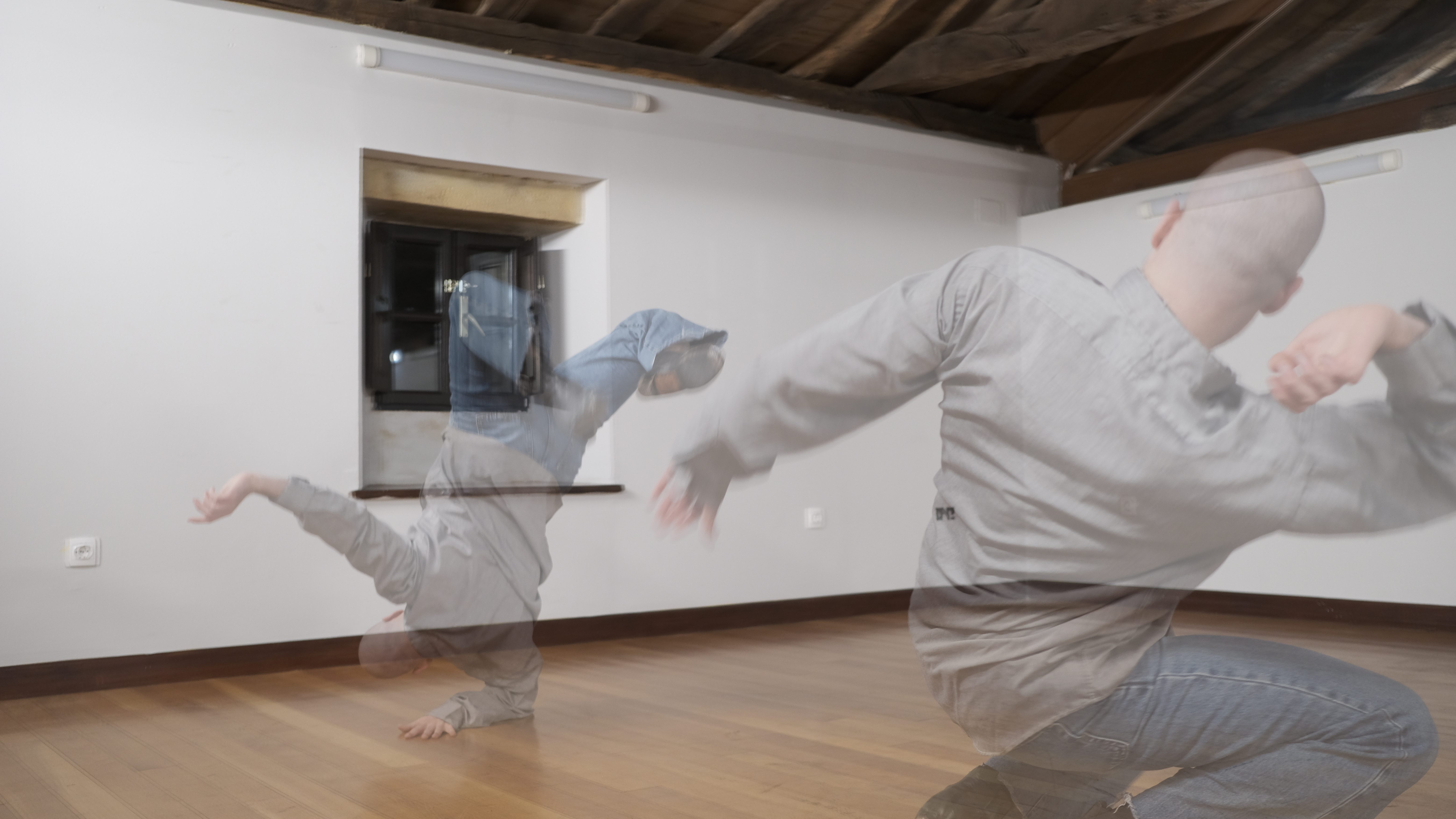
transfers this operation to the body: a step, a breath or an impact against the floor can become
a sample that is repeated, displaced and transformed. The body sits at the centre of this journey:
a source of rhythm, a place of listening and the starting point for a new movement.
The sonic impulse becomes weight, support, momentum and duration. A gesture produces a sound;
that sound, repeated or altered, returns to the body and changes its next action. In this
back-and-forth circuit, the body samples and is sampled: it listens to what it has produced
and returns it transformed.
This body that receives, transforms and returns is also the starting point for exploring
ida y vuelta dances: gestures, rhythms and techniques that travel between territories and
bodies, returning altered by each encounter. Flamenco footwork, breaking, football, popular
culture, family memory and digital images coexist as a living archive. Every gesture carries
transmissions, appropriations and erasures. By cutting, repeating and recomposing them, the
performer asks how to build a personal voice from movements shaped by many bodies.
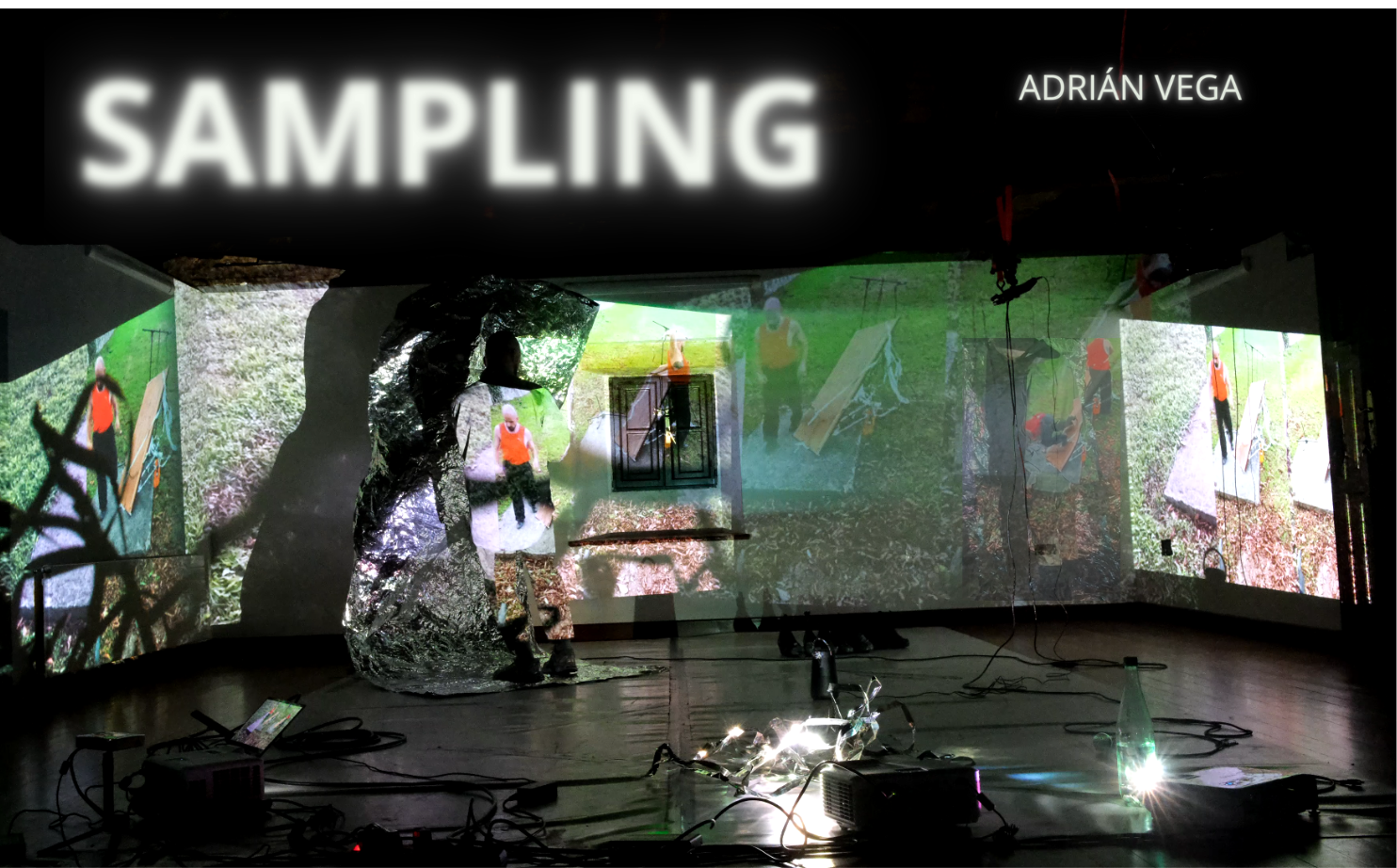
The work begins while the audience enters. A rhythmic structure holds the room as the
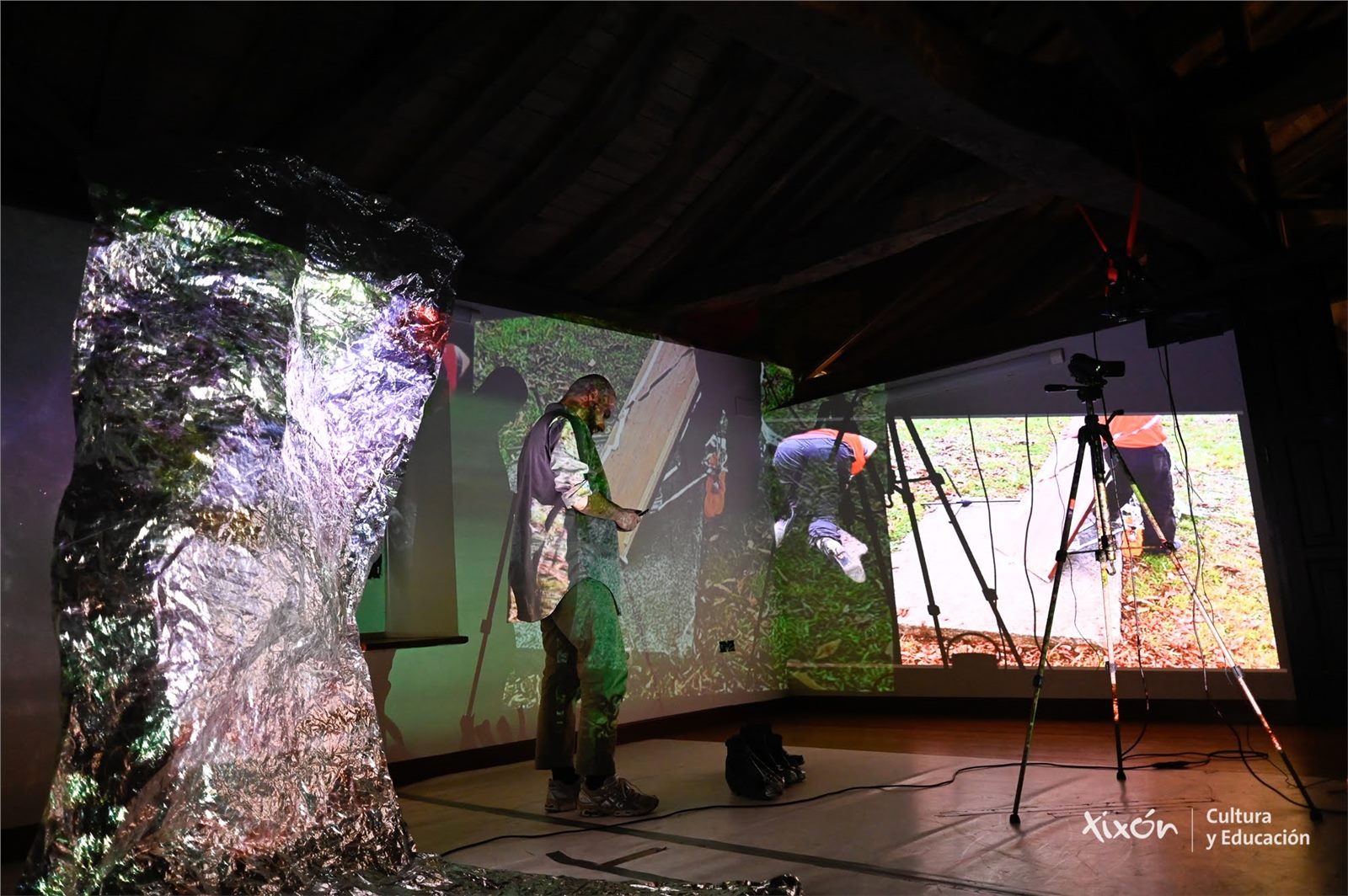
performer prepares cables, cameras, shoes, microphones, reflective surfaces and a football.
The stage gradually becomes a recording and projection device. Each action creates an image,
each image returns to the body, and each return changes the movement.
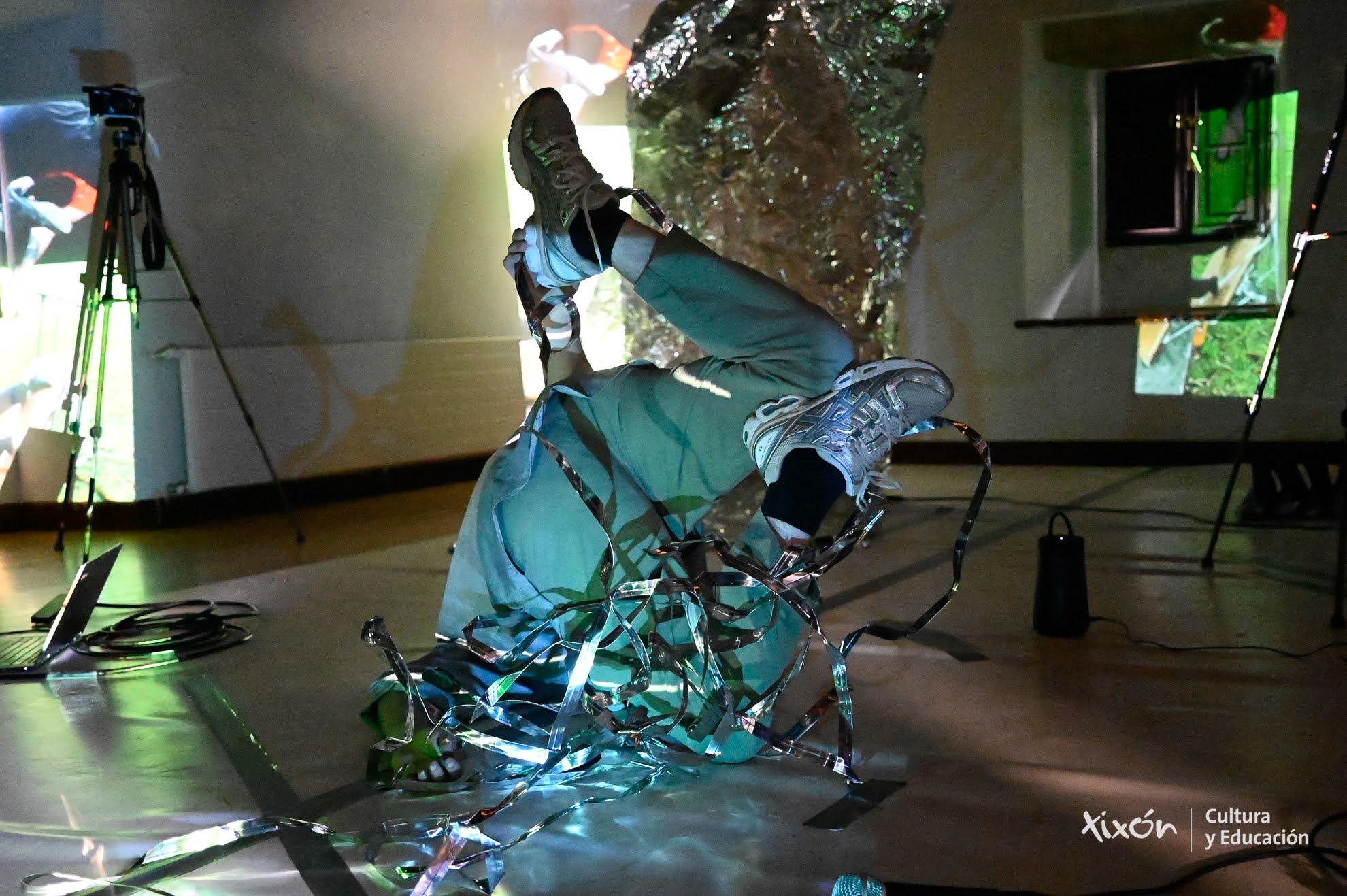
Four projections create a frontal field of multiplied images. The body receives them through
costume, skin, mylar and scenic surfaces. The performer controls the apparatus, then enters
its delays, residues and visual errors. Choreography, image, sound and light continuously
rewrite one another.